Choosing the right commercial lighting requires more than comparing wattage and price. China’s leading UGR19 low glare LED panel manufacturers now offer efficient solutions for offices, classrooms, hospitals, and retail interiors. These panels are designed to reduce uncomfortable brightness within typical viewing angles. They can make computer work easier and create a calmer ceiling appearance.
So, what are the benefits of ugr19 low glare led panels? The answer involves visual comfort, energy control, and dependable installation. A well-designed panel can reduce reflections on monitors and support better concentration during long working hours. Its even light distribution may also limit harsh shadows across desks and walkways. However, UGR19 is not a universal guarantee. Room size, wall colors, screen positions, and installation height still affect real performance.
Experienced buyers should request photometric files, test reports, flicker information, and warranty terms before selecting a supplier. They should also verify whether the stated UGR value applies to the complete lighting layout, not only the product sample. In practical projects, a panel may look comfortable in a showroom but feel different in a bright office. Small details matter. Product quality varies.
This guide examines the main advantages of China top UGR19 low glare LED panels. It also considers efficiency, maintenance, color quality, safety, and long-term value. The goal is not to promote one specification blindly. It is to help buyers compare evidence and choose lighting that suits actual spaces.
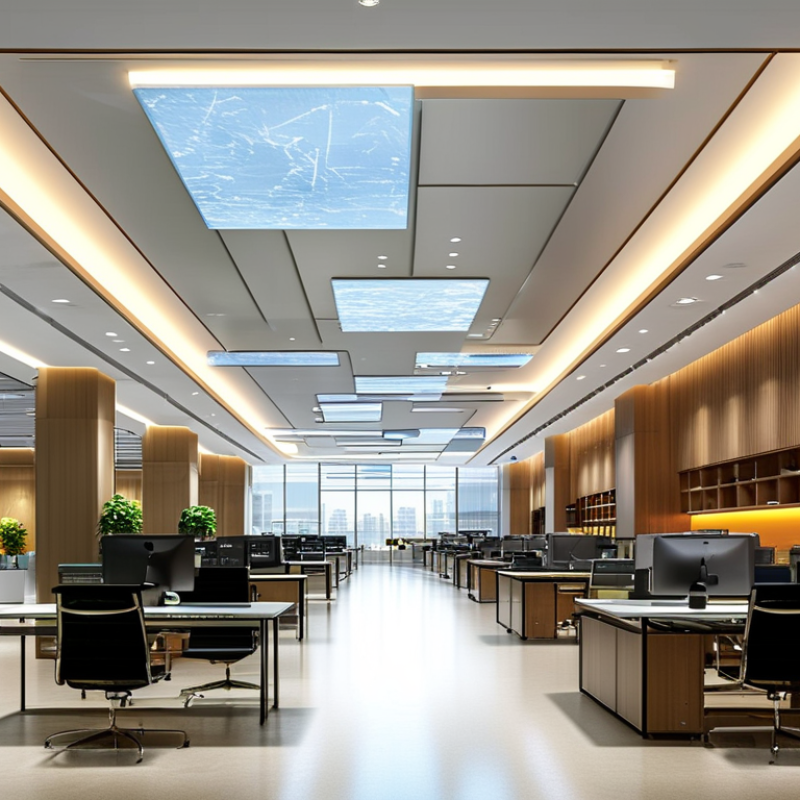
UGR<19 Explained: The Unified Glare Rating Standard for LED Panels
UGR means Unified Glare Rating, a method for evaluating discomfort glare in indoor lighting. A UGR below 19 is commonly recommended for offices, classrooms, design studios, and computer workspaces. It indicates that bright light sources should not distract occupants or cause eye strain during normal tasks. Lower glare matters.
However, UGR is not a fixed feature of the panel alone. Room size, ceiling height, wall colors, mounting layout, viewing direction, and surrounding brightness all affect the result. A panel may achieve UGR<19 in one photometric calculation, yet perform differently in a small room with white walls and glossy desks. This detail is often overlooked.
Reliable assessment requires photometric data and a declared calculation method. Look for test reports, optical distribution information, and suitable spacing guidance. Microprismatic or recessed optics can control the view of bright LED points, especially above monitor height. In practice, I would also inspect the room after installation. The number is useful, but it is not magic. Reflections may remain. A dimmer setting, better spacing, or a different mounting angle might still be needed. Good lighting should feel calm, with clear visibility and no harsh bright patches across the ceiling or screen.
The Unified Glare Rating (UGR) is a lighting-design calculation used to estimate discomfort glare in an indoor space. A UGR<19 target is commonly specified for offices, classrooms, meeting rooms, and other screen-based work areas.
| Data Dimension | UGR<19 Low-Glare LED Panel | Standard or Higher-Glare Panel | Practical Benefit |
|---|---|---|---|
| Glare classification | Designed to achieve UGR<19 under the specified room conditions | May have a UGR of 19 or higher, depending on optical design and installation | Reduces the likelihood of visual discomfort caused by bright luminous surfaces |
| How UGR is determined | Calculated from luminaire luminance, quantity, position, room geometry, surface reflectance, and observer location | Often assessed using the same parameters, but the result may exceed the project limit | Encourages lighting designs based on the complete room rather than on the panel alone |
| Typical office target | UGR<19 for reading, writing, computer work, and general office areas | UGR 19–22 may be acceptable in less glare-sensitive areas, subject to the project specification | Supports comfortable visual conditions for prolonged desk and screen work |
| Typical education target | UGR<19 is commonly used for classrooms and teaching spaces where students view boards and screens | Higher glare levels can make visual tasks less comfortable | Helps improve viewing comfort for students and teachers |
| Optical control | Usually uses a micro-prismatic diffuser, controlled lens, louvre, or other glare-management optic | May use a broad diffusing cover with less control of high-angle luminance | Controls light distribution and limits excessive brightness in common viewing directions |
| Common panel sizes | 600 × 600 mm, 300 × 1200 mm, and 600 × 1200 mm are widely used modular ceiling formats | Often available in the same ceiling-compatible sizes | Allows straightforward replacement of standard recessed or surface-mounted ceiling panels |
| Typical power range | Approximately 30–50 W for many commercial panel configurations | Approximately 30–50 W for comparable commercial panels | Power consumption should be evaluated together with delivered lumens, controls, and operating hours |
| Typical luminous efficacy | Approximately 90–130 lm/W for many current commercial LED panel designs, depending on optics and driver | May fall within a similar range; glare performance and efficacy are separate design parameters | Provides a basis for comparing energy use without treating efficacy as a substitute for glare control |
| Common color temperatures | 3000 K, 4000 K, and 5000 K are commonly specified for indoor LED panels | Usually available in the same color-temperature options | 4000 K is frequently selected for offices and classrooms, while the final choice depends on the application |
| Color rendering | Ra/CRI ≥80 is a common general-lighting requirement; higher values may be specified for color-critical tasks | May meet the same requirement, but CRI does not determine UGR | Helps objects, documents, and interior finishes appear more natural under artificial light |
| Flicker performance | Depends primarily on the LED driver and control system; verified values should be requested from the supplier | Also depends on the driver and cannot be inferred from UGR alone | Low-flicker operation can improve comfort, especially in workspaces occupied for long periods |
| Screen-work suitability | Well suited to offices, computer rooms, libraries, control rooms, and classrooms when the lighting layout is correctly designed | May require careful positioning, shielding, dimming, or spacing to limit reflections and glare | Supports clearer screen viewing and reduces the need for occupants to reposition themselves |
| Energy-saving potential | Uses LED sources and can be combined with occupancy, daylight, or dimming controls | LED technology can also provide energy savings, even when glare control is limited | Reduces operating energy when the lighting system is properly controlled and commissioned |
| Compliance consideration | Should be checked against the applicable edition of EN 12464-1 or the project’s local lighting standard | May comply with illuminance requirements but fail a project-specific glare limit | Helps align product selection with measurable lighting-design requirements |
| Installation requirement | Correct panel spacing, mounting height, orientation, room reflectance, and viewing direction are essential | Installation conditions are also important, but uncontrolled luminance may create more glare risk | Ensures that the intended low-glare performance is maintained in the completed room |
Important: UGR<19 is not an absolute product-only rating. The final UGR value must be calculated for the actual room, luminaire arrangement, mounting height, surface reflectances, and observer positions. Confirm photometric files, tested luminance data, driver specifications, and the applicable lighting standard before making a project decision.
It indicates a low discomfort-glare level for indoor lighting. Bright panels should feel less distracting during normal work. Lower glare helps.
No. The result depends on room size, ceiling height, wall color, and installation layout. A panel may meet UGR<19 in one calculation but not another room.
It can reduce harsh brightness during reading, meetings, and computer tasks. The ceiling should look calm, not patchy or dazzling. Comfort still depends on the whole room.
It can reduce reflections, but it cannot remove every reflection. A pale window shape may still cross a dark screen. Desk direction, blinds, and panel position also matter.
Request photometric data, optical distribution details, and spacing guidance. Check the declared calculation method. A catalogue claim alone is not enough evidence.
Microprismatic or recessed optics can hide bright LED points from common viewing angles. They work best with suitable mounting height and spacing. Optics are not magic.
Inspect the actual room, including desks, screens, walls, and ceiling height. Read a spreadsheet for thirty minutes. Notice eye strain, reflections, and paper shadows.
Try dimming the panels, changing their spacing, or adjusting the mounting angle. Move screens away from bright reflections. I would also check daylight from windows, because it is easy to overlook.
What are the benefits of ugr19 low glare led panels? These panels are designed to reduce uncomfortable and distracting glare, achieving a Unified Glare Rating below 19 for demanding indoor environments. Through carefully engineered optical systems, controlled light distribution, and well-balanced luminance, they can provide comfortable illumination at the 500-lux level commonly required in offices. This helps reduce visual fatigue and reflections on computer screens, supporting more productive screen-based work while aligning with the visual comfort principles of EN 12464-1.
In addition to improving comfort, low-glare LED panels can deliver strong energy performance, typically producing around 100–160 lumens per watt. Their efficient output can help reduce electricity consumption without sacrificing consistent, high-quality lighting. These advantages make UGR<19 panels suitable for offices, schools, hospitals, meeting rooms, libraries, retail spaces, and other commercial interiors where people need clear visibility, comfortable working conditions, and reliable long-term illumination.

 Lili Light