Outdoor solar lights rely on a small photovoltaic panel to recharge their batteries each day. A thin film of dust, pollen, or dried rainwater can reduce the light reaching its surface. The effect may be easy to miss: a panel can look nearly clean while a cloudy layer dulls its output.
IEA PVPS Task 13’s 2022 report, Soiling Losses – Impact on the Performance of Photovoltaic Power Plants, describes typical soiling losses of roughly 3–5% across photovoltaic systems, with substantial variation by location and conditions. These figures concern larger PV systems, not a guaranteed loss rate for garden lights. Still, they show why surface cleanliness deserves attention. Shade, short winter days, an aging battery, and a failing connection can also leave a lamp dim. Cleaning alone may not solve it.
This guide explains how to clean solar panels on outdoor lights for max efficiency using practical, low-risk steps. It covers when to clean, what supplies to use, and how to remove grime without scratching the panel or soaking electrical parts. A soft cloth, lukewarm water, and a careful touch are usually enough. Avoid abrasive pads and harsh cleaners; they can leave scratches or damage seals. Small details matter. Check the panel again after drying, and compare the light’s performance over several evenings. Results depend on weather and battery condition, so one quick test is not proof. Cleaning helps, but it is not magic.
Identify the Solar Panel and Inspect the Outdoor Light
How to Clean Solar Panels on Outdoor Lights Efficiently?
Identify the solar panel before touching the outdoor light. It is usually a small dark rectangle on the top, lid, or separate cable-mounted panel. Do not confuse it with the LED cover. The panel absorbs sunlight and charges the internal battery, while the LED only produces light. IEA PVPS Task 13 reports that soiling commonly causes about 2–5% annual energy loss in photovoltaic systems, although dusty locations can perform worse. Small outdoor lights may react more noticeably because their panels have limited surface area.
Turn the light off, or cover the panel, before inspection. Check for dust, bird marks, leaves, cloudy plastic, cracks, and loose wiring. A panel can look acceptable but still have a thin oily film. That detail is easy to miss. Look at the battery compartment for corrosion or moisture, too. These problems may imitate a dirty panel. A practical mistake is cleaning immediately without checking shade from fences, plants, or walls. Even a clean panel cannot charge well in partial shade.
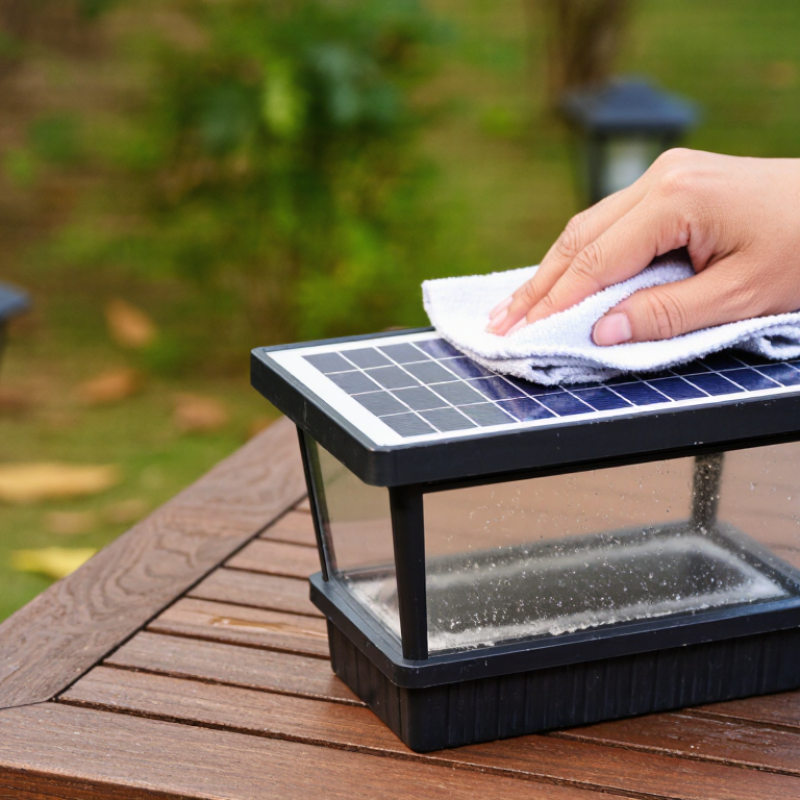
Wipe the panel with a soft, damp microfiber cloth. Use clean water first. If residue remains, add a small amount of mild soap, then rinse and dry the surface. Avoid abrasive pads, strong solvents, and high-pressure spray. The U.S. Department of Energy recommends regular photovoltaic inspection and gentle cleaning methods to protect equipment performance. Frequency depends on dust, rain, and nearby trees; monthly checks are reasonable in dry areas, but not every panel needs weekly washing. My earlier assumption that brighter light always meant a healthy panel was incomplete; battery age and wiring deserve equal attention.
How to Clean Solar Panels on Outdoor Lights Efficiently?
Identify the solar panel and inspect the outdoor light before cleaning. Dust, pollen, and bird residue can reduce the amount of sunlight reaching the photovoltaic surface.
The chart shows typical relative charging performance compared with a clean panel. Light dust usually causes a small reduction, while heavy dirt or shading can significantly limit battery charging. Turn off the light, wipe the panel with a soft damp cloth, remove residue gently, and let the surface dry before testing it.
Gather Supplies and Prepare the Light for Cleaning
How to Clean Solar Panels on Outdoor Lights Efficiently?
Gather Supplies and Prepare the Light for Cleaning
Before cleaning, gather a soft microfiber cloth, a soft-bristle brush, clean water, mild dish soap, and rubber gloves. A small bowl helps control water around the light. Avoid abrasive pads and pressure washers. They can scratch the panel or force moisture into its seams.
Turn the light off and remove its battery, if the design allows it. Let the panel cool before touching it. I usually clean outdoor lights in the morning, when dew has softened dust. Place the light on a stable surface, or secure it firmly if it remains installed. Check for cracked covers, loose wires, or swollen batteries. Do not clean damaged electrical parts yourself.
The IEA PVPS Task 13 reports that soiling commonly reduces photovoltaic output by about 2–4% annually, with higher losses in dusty regions. NREL research also identifies dust, pollen, and bird residue as important causes of performance decline. Small panels can lose useful charging power quickly. That matters on cloudy days.
Dampen the cloth, rather than pouring water directly onto the panel. Brush away dry grit first. Then wipe gently in one direction. Use diluted mild soap only for sticky residue, and rinse with a barely damp cloth. Dry the surface completely before reinstalling the battery. I still miss a corner sometimes. Inspect it under a flashlight. Avoid cleaning under harsh sunlight, because water spots may dry before you can remove them.
Remove Dust and Grime Without Scratching the Panel
How to Clean Solar Panels on Outdoor Lights Efficiently?
Remove Dust and Grime Without Scratching the Panel
Before cleaning, switch off the outdoor light and let the panel cool completely. Hot glass can react badly to cool water. Wipe away loose dust with a clean, dry microfiber cloth. Use gentle strokes instead of pressing down. Small sand particles can act like rough grit.
For sticky grime or dried bird droppings, place a damp cloth over the area for several minutes. This softens the residue without scraping. Mix lukewarm water with a small amount of mild soap. Dip a soft cloth into the solution, wring it well, and wipe the panel carefully. Do not spray water directly onto the light housing. Moisture may enter seams or electrical parts.
Rinse the cloth often, because trapped dirt can create fine scratches. Avoid paper towels, rough sponges, metal tools, and strong household cleaners. After washing, use a separate damp cloth to remove soap traces. Dry the surface with a soft, lint-free towel. I once cleaned a panel too quickly and left a cloudy film behind. It looked clean until sunlight returned. A final inspection from different angles helps reveal missed grime, especially around the panel edges and frame. Clean on a cloudy, dry day when possible, and check the light after everything is fully dry.
How to Clean Solar Panels on Outdoor Lights Efficiently? — Remove Dust and Grime Without Scratching the Panel
| Situation |
Recommended Timing |
Safe Cleaning Method |
Important Precaution |
| Light dust or pollen |
When a visible film appears, or during routine seasonal checks |
Switch off the light. Wipe the cool panel gently with a clean, soft microfiber cloth. |
Do not wipe with a dry, gritty cloth; loose particles can scratch the surface. |
| Dried dirt or bird droppings |
As soon as practical after noticing the buildup |
Dampen the panel with clean water, let stuck-on residue soften briefly, then wipe gently with microfiber. |
Avoid scraping with fingernails, blades, scouring pads, or other abrasive tools. |
| Stubborn grime |
Only when water and gentle wiping are not enough |
Use a small amount of mild, diluted soap with water; wipe gently and rinse with clean water. |
Keep liquid away from seams, charging ports, and exposed electrical parts. Follow the fixture’s care instructions. |
| Hard-water spots after cleaning |
After rinsing, if mineral marks remain |
Wipe dry with a clean microfiber cloth, or use distilled water for the final rinse. |
Do not use strong acids, solvents, or abrasive cleaners to remove spots. |
| Routine maintenance |
Check periodically and clean when dirt is visible; inspect more often in dusty or high-pollen areas |
Remove leaves and debris around the panel, then clean its surface using the gentlest method that works. |
Cleaning needs vary with weather, nearby trees, dust, and the fixture’s location. |
| Hot, sunny, or freezing conditions |
Wait for a mild time of day and a cool, frost-free panel |
Clean in shade or during a cooler part of the day using room-temperature water. |
Sudden temperature changes may stress the panel or its cover. Do not pour hot water onto a cold or frozen surface. |
Rinse, Dry, and Reassemble the Solar Light
Rinse the panel only after switching the light off and letting it cool. A gentle stream of clean water loosens dust and bird droppings without forcing water into seams. Wipe remaining marks with a soft, damp microfiber cloth; use a little mild soap for stubborn grime. Avoid scouring pads, solvents, and pressure washers. They can scratch the panel or damage its housing. No harsh scrubbing. One easy-to-miss detail: dirt often collects around the panel’s edge, where a cloth can catch on the seal.
Dry the panel and housing with a clean cloth, then leave them open briefly if moisture remains near the battery compartment. Make sure the contacts are dry before reconnecting anything. Reassemble the light carefully, checking that the cover sits flush and its seal is not twisted. The IEA PVPS report Soiling Losses – Impact on the Performance of Photovoltaic Power Plants estimates global PV energy losses from soiling at roughly 3–4% annually; local conditions vary, and that figure is not a direct forecast for small lights. Still, grit and pollen can reduce charging. Set the light back in its usual sunny position and check it after dusk. I would not assume one rinse fixes every dim light; an aging battery or shaded panel may also be the culprit.
Test the Light and Plan Regular Panel Cleaning
How to Clean Solar Panels on Outdoor Lights Efficiently?
Test the Light and Plan Regular Panel Cleaning
Before cleaning, check whether the light turns on after dusk. Give it a full sunny day to charge, then note its brightness and how long it stays lit. If it seems dim, inspect the panel for dust, pollen, or bird droppings. Also check that nearby plants have not begun shading it. A dirty panel is common, but a weak battery or faulty switch can cause similar symptoms.
Set a simple inspection schedule. Check panels monthly, then clean them when you see a visible film or after heavy pollen, dust, or dry weather. Use a soft, damp microfiber cloth and a little mild soapy water for stubborn marks. Wipe gently, rinse with a clean damp cloth, and let the surface dry. Avoid abrasive pads and forceful sprays; they can scratch or push water into the housing.
Tips: Clean in the morning or evening, when the panel is cool. Retest the light that night. Keep a brief note of cleaning dates and performance; it may reveal a pattern, though my own notes are not always consistent. If the light still fades quickly after a sunny day and a clean panel, check the product instructions before inspecting or replacing any parts.
Conclusion
Cleaning outdoor solar lights regularly helps maintain reliable illumination and extend their useful life. Begin by locating the solar panel and inspecting the light for cracks, loose parts, or stubborn buildup. Switch off the light or remove its battery if appropriate, then gather a soft cloth, a small amount of mild soap, and clean water. To understand how to clean solar panels on outdoor lights for max efficiency, gently wipe away dust and grime without using abrasive pads or harsh cleaners that could scratch or damage the panel.
Rinse the surface lightly, taking care not to soak electrical components, and dry it with a soft, lint-free cloth before reassembling the light. Once it is back together, place it where the panel receives ample sunlight and test its operation after dark. A simple routine of checking and cleaning the panel every few weeks, or whenever it looks dirty, can help preserve its ability to collect sunlight and keep the light working effectively.

 Lili Light